DEFINITIVE GUIDE
How to Choose the Ideal Land
for your MOODUL Modular Home
Your future home starts with a solid foundation. Discover all the key aspects you should consider before purchasing land for your modular home.
The Importance of Choosing Well
Selecting the site is the first—and perhaps most important—step in building your modular home. Unlike traditional construction, a MOODUL home is manufactured in a controlled environment and transported to the site for installation, which entails specific considerations.
An informed decision at this stage will save you time, money, and headaches in the future, ensuring your project moves forward smoothly.
Did you know that…?
40% of modular construction project delays are due to problems not detected on the ground during the initial phase.
Key aspects to consider

1. Urban Planning Regulations: The Legal Framework
Attention!
Never buy land without checking its urban classification. This is the most common and costly mistake.
Before getting excited about the views or the location, it's essential to understand what regulations allow for that plot. Here are the key points to check:
Soil Classification
It must be urban either developableRural or undeveloped land rarely allows for residential buildings.
Buildability
Determines how many square meters you can build. It is expressed as a ratio (for example: 0.5 m²/m²).
Occupation
Percentage of the land that can be occupied by the home. Usually between 30% and 60% on residential plots.
Setbacks
Minimum distance from the boundaries of the plot to where construction can begin.
Maximum Height
Limitation in meters or number of floors that the building can have.
Allowed Typology
Some areas only allow certain architectural styles or specific materials.
Where can I find this information?
City hall
Department of Urban Planning
Urban Portals
Municipal electronic headquarters
Architects
Regulatory specialists
The MOODUL service
At MOODUL, we offer a free regulatory study of any plot you're considering to verify its viability for a modular home.
2. Ideal Physical Characteristics
The nature of the terrain will affect both the cost and the final outcome of your project. These are the physical aspects to consider:
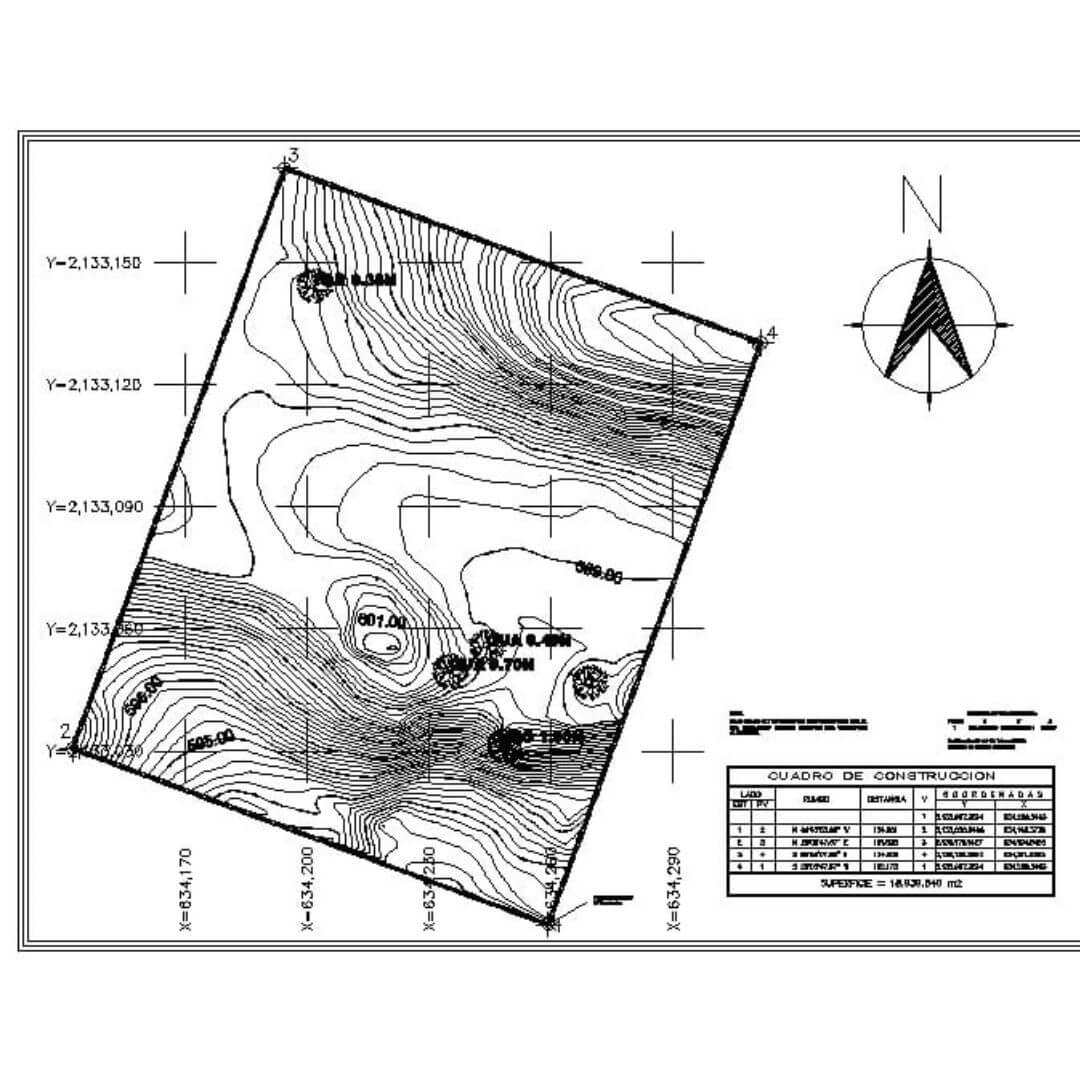
Topography
Flat or gently sloping terrain is ideal for modular homes. Excessive slopes can complicate:
- • Transport of the modules
- • Crane maneuvering
- • The foundation (higher cost)
Advice: If your land is sloping, consult with our team. Special solutions are available for these situations, although they often involve an additional cost.
Soil Composition
The quality of the soil will directly affect the type of foundation:
| Soil Type | Implications |
|---|---|
| Rocky | Excellent stability, but expensive to excavate |
| Clayey | Possible seasonal movements |
| Sandy | May require reinforced foundation |
| Stuffed | Very problematic, avoid if possible |
Size and Shape
For MOODUL modular homes, consider:
- • Minimum frontage of 15 meters to facilitate maneuvers
- • Rectangular or square plot for greater use
- • Minimum recommended area: 500 m²
Highly irregular shapes can limit design options or make it difficult to implement modules.
Orientation and Sunlight
The optimal orientation will depend on the geographic area, but in general:
South
Ideal for common areas, more natural light all year round
North
Perfect for bedrooms, softer and more constant light
This
Morning light, ideal for bedrooms and breakfast rooms
West
Afternoon light, can overheat in summer
Natural Hazards
Evaluate whether the land is in zones of:
Flood
Consult hydrological risk maps
Landslides
Especially on sloping terrain
Fires
Relevant in wooded areas
Is a geotechnical study necessary?
We always recommend conducting a geotechnical study before making a final purchase. This study thoroughly analyzes the soil's characteristics and can prevent unpleasant surprises during construction.
3. Accessibility: Critical Factor for Modules
Crucial factor!
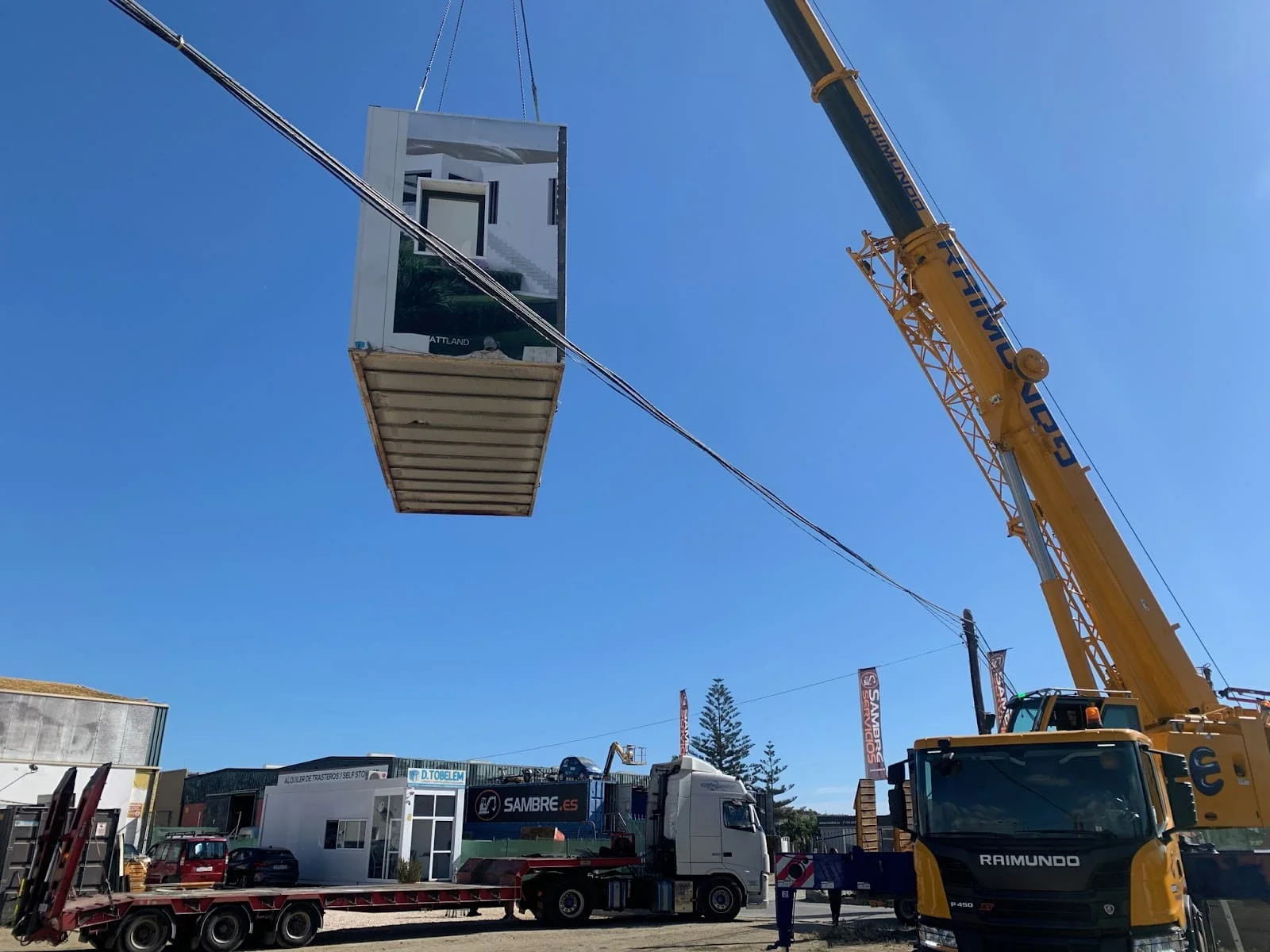
Accessibility is especially important for modular homes, as the modules must be transported on special trucks and placed in place with cranes.
Access Requirements for Transportation
Roads and highways:
Obstacles to avoid:
Space for Crane Maneuvers
To implement modules you need:
Alternative solutions: For terrains with difficult access, there are options such as:
- • Smaller modules
- • Longer reach cranes
- • Intermediate transfer base
These solutions often involve an additional cost.
Accessibility Checklist
4. Essential Services and Supplies
Although a MOODUL home arrives practically finished, it still needs to be connected to basic services. Check the availability and quality of:
Water
Connection to public grid or possibility of a well
Check:
- • Adequate pressure
- • Water quality
- • Connection costs
Electricity
Nearby connection point and sufficient power
Check:
- • Distance to connection point
- • Available power
- • Extension costs
Sanitation
Sewer network or autonomous system
Check:
- • Connection to municipal network
- • Possibility of septic tank
- • Necessary permissions
Telecommunications
Internet, telephone and television
Check:
- • Availability of fiber optics
- • Mobile coverage in the area
- • Alternatives (4G/5G, satellite)
Gas
Natural or propane (optional)
Check:
- • Natural gas network nearby
- • Alternative: propane tank
- • Compatible with aerothermal energy

"Invisible" costs
Remember to include the cost of connecting these services in your budget. Sometimes, a cheaper plot can end up being more expensive if it requires significant infrastructure investments.
Examples of additional costs:
- Electrical transformer if there is not enough power
- Extension of water/sanitation networks to more than 100 meters
- Drilling and well equipment
- Water tank if the pressure is insufficient
- Wastewater treatment system
Solutions for unserviced land
MOODUL homes can incorporate autonomous systems such as solar panels, water tanks, or eco-friendly septic tanks. Consult with our technical team to evaluate the options available for your specific needs.
5. Practical Tips for Your Search
Before visiting the land
Research the area online
Use Google Earth to view the plot from above, check slopes and access points.
Consult the cadastre
Check the cadastral reference and that the limits match what was offered.
Plan your visits
Visit the grounds at different times of the day to assess light, noise, and surroundings.
Talk to neighbors
They can give you valuable information about the area and potential problems.
During the visit
Take photos and measurements
Document the plot from all angles and mark reference points.
Check access
Check widths, curves and obstacles with module transport in mind.
Observe the orientation
Use a compass to identify north/south and analyze sunlight.
Check services
Locate nearby water and electricity connection points.
Before buying (documentation)
Urban planning documentation
Legal documentation
Technical studies
We help you evaluate your land
At MOODUL, we offer a free preliminary assessment service for any land you're considering. Our technical team will analyze the feasibility of a modular home and provide you with a detailed report.
Ultimate Checklist
Use this checklist to evaluate any plot you are considering:
Ready to find the perfect piece of land?
At MOODUL, we can help you evaluate any plot you're considering and verify its viability for a modular home. Take advantage of our free preliminary assessment service.
Contact our technical team
Send us the location and basic information about the property you're considering, and we'll provide a no-obligation preliminary evaluation.