Visual Comparator
Traditional Construction vs. MOODUL System
Discover the real differences between the conventional construction method and MOODUL's modular industrialized system, comparing aspect by aspect with objective data.

1. Implementation Deadlines
- Total duration: 12-18 months
- Climate dependence: high (rain, cold, heat)
- Sequential processes: each phase waits for the previous one
- Usual delays due to coordination between trade associations
- Concrete drying and setting period
- Risk of deviation from the original schedule
- Total duration: 5-9 months
- Factory manufacturing: without climate dependence
- Parallel processes: simultaneous manufacturing and foundation work
- Optimized internal coordination
- On-site assembly: 1-2 days
- Guaranteed schedule with minimal deviations
Time savings: up to 9 months
The MOODUL system can reduce the total time by up to 50% compared to traditional construction, allowing you to enjoy your home sooner and reducing financial costs.
2. Quality Control
- Outdoor execution with uncontrollable variables
- Quality dependent on labor
- Occasional, not systematic, inspections
- Difficult to verify hidden installations
- Finishes exposed to dust, moisture and dirt
- Primarily visual inspection, few technical tests
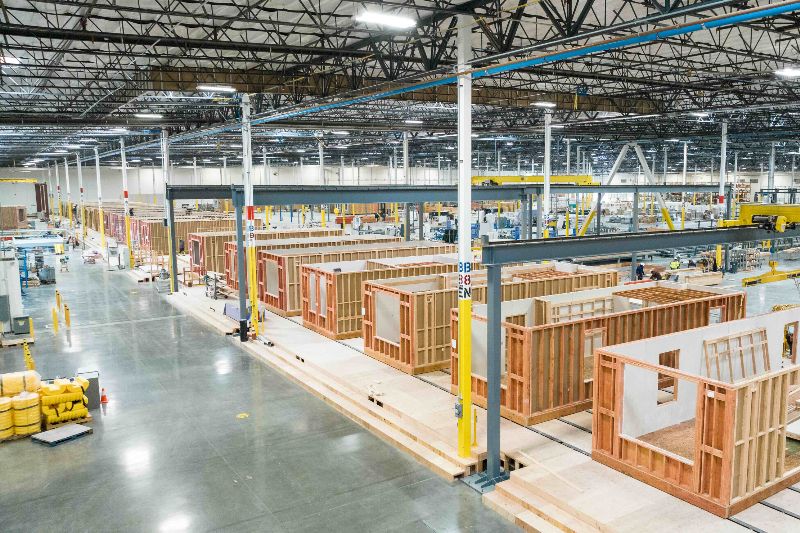
- Manufactured in a controlled and clean environment
- Standardized processes with ISO certifications
- Quality control at every stage of production
- Verification and testing of facilities before transport
- Finishes applied under optimal conditions
- Documented technical tests (watertightness, insulation, etc.)
Key quality factors
| Aspect | Traditional Construction | MOODUL System |
|---|---|---|
| Air tightness | Variable, with possible infiltrations | Factory tested and certified |
| Thermal bridges | Difficult to eliminate completely | Eliminated through industrial design |
| Sound insulation | It depends on the execution on site | Systematically controlled and verified |
| Finishes | Variables according to construction conditions | Perfect due to its execution under optimal conditions |
3. Sustainability and Ecological Footprint
- Waste generation: 15-20% of the material
- High and difficult-to-control water consumption
- Emissions from multiple material transport
- Prolonged noise pollution in the environment
- Dust and constant suspended particles
- Complex and costly waste management
- Waste generation: 3-5% of the material
- Optimized and measured water consumption
- Single transport of finished modules
- Noise pollution: assembly only 1-2 days
- Zero dust in the vicinity of the plot
- Recycling integrated into the manufacturing process
Reduction of 60% in waste generation
Industrialized manufacturing allows for the recycling, reuse, and optimization of materials, drastically reducing the environmental impact compared to traditional construction.
4. Energy Efficiency
- Energy certification: usually C, D or E
- Common thermal bridges in structures
- Watertightness varies depending on execution
- Isolation with possible discontinuities
- Energy consumption: 80-150 kWh/m²/year
- High long-term air conditioning costs
- Energy certification: A or higher series
- Zero thermal bridges by industrial design
- Proven and certified watertightness
- Continuous, uninterrupted isolation
- Energy consumption: 20-40 kWh/m²/year
- Savings of 60-70% on energy bills
Integrated efficiency systems in MOODUL
5. Structural Durability
- Reinforced concrete or brick structure
- Lifespan: 50+ years with maintenance
- Possible cracks due to ground settlement
- Quality dependent on on-site execution
- LOE structural warranty: 10 years
- Periodic maintenance required
- M-STAK structure: galvanized steel + concrete
- Lifespan: 50+ years with minimal maintenance
- Superior anti-seismic behavior
- Controlled and certified industrial quality
- LOE structural warranty: 10 years + certifications
- Premium quality materials with certifications
Structural advantages of the M-STAK system
The combination of high-strength galvanized steel with reinforced concrete flooring offers the advantages of both materials:
6. Customer Experience
- Indicative budget with possible deviations
- Stress due to uncertainty in deadlines and costs
- Frequent site visits for supervision
- Prolonged annoyances: noise, dust, traffic
- Decisions made during construction regarding unforeseen events
- Final result with possible defects to correct
- Price fixed from the start, no surprises
- Peace of mind guaranteed by calendar
- Virtual monitoring of the manufacturing process
- Minimal disruption: only 1-2 days of assembly
- All decisions made before manufacturing
- Delivered with full checks and guarantees
The MOODUL process step by step
Comparative Summary
| Criterion | Traditional Construction | MOODUL System |
|---|---|---|
| Total term | 12-18 months | 5-9 months |
| Predictability | Medium-low | High |
| Quality control | Variable | Systematic |
| Energy efficiency | C, D or E | A or higher |
| Waste generated | 15-20% | 3-5% |
| Nuisance on plot | 12-18 months | 1-2 days |
| Price | Indicative with deviations | Closed since the beginning |
| Personalization | High | High |
Ready to discover the future of construction?
The MOODUL system combines the best of industrialization with architectural customization. Discover how we can build your ideal home with guaranteed quality, speed, and sustainability.